Boruto: Two Blue Vortex, Chapter 32 Revisited
I'm still not over chapter 32 of Boruto: Two Blue Vortex (TBV).
I endeavor to post my chapter reviews on the same day as the release for obvious reasons, but this doesn't always lend itself to deeper reads. When I do have additional thoughts, the smaller ones often end up on my Bluesky account, the larger ones here, formed into coherent single-subject posts. Unfortunately, I have a really bad case of chapter 32 brainrot—a lot of diffuse observations and reconsiderations that don't really lend themselves to exclusive content. Nonetheless, I want to return to the chapter with all of you. Consider this a chapter review patch, a version 1.5 of my official review.
Brothers and Sisters
Dusting off ye olde Twitter archive, I've been on the sibling subject for a while now—with good reason. There are very few sibling pairs in the new generation—Hima and Boruto, Mitsuki and Log, and Eida and Daemon. Returning to Naruto for a moment, Hinata and Hanabi, the Sand family, and Kiba and Hana some rare cases in which all siblings survive to adulthood. The plot is littered with lost siblings: Tsunade and Nawaki, Sasuke and Itachi, Madara and Izuna, Hashirama and Tobirama surviving Kawarama and Itama. Adoptive pairings of "brothers" are as common than seeing two living siblings together, be it the Raikage and Killer Bee, Naruto and Sasuke, Sai and Shin (a case where Shin died as well).




Have I actually been posting about the same shit for four years? Yes, yes I have.
In some ways, we can view the lack of siblings in the new generation as an extension of an era of peace, an era in which the parents who fought in the Fourth Great Ninja War didn't think they needed extra children to guarantee their family's survival in the shinobi world. It's also a sign heralding the end of cycles of violence driven by the original sibling conflict at the beginning of the age of shinobi, that of Indra and Asura. This is all to say that when we see siblings in the series, it's time to start paying attention and take a closer look. Let's see how this relates to chapter 32.
Himawari and Her Brothers
In Himawari's view of the world, Kawaki is Boruto, her true big brother, and Boruto is Kawaki, the adopted brother who lived in her household, once saved her life, and is accused of killing her parents. Because of Omnipotence, it's hard to talk about each one individually when viewing them through her eyes. As the chapter closes, her big brother has overheated on the battlefield and is under attack by Mamushi while her adopted brother is caring for Sarada.
Both brothers have been depicted as being protective of Himawari, some of the first true bursts of emotional sentiment expressed by each of them over her wellbeing. Simultaneously, both have rejected the role of being her "big bro," Boruto due to her perception of the world through Omnipotence and Kawaki... Okay, let's just say we don't get a lot of emotional clarity from Kawaki. Through one lens, his rejection of the name could be read as the only vestige of guilt he has over taking her family away. Through another, he could simply hate being called Boruto's name. I think it's the prior, but I'm not going to reject reads of the latter.
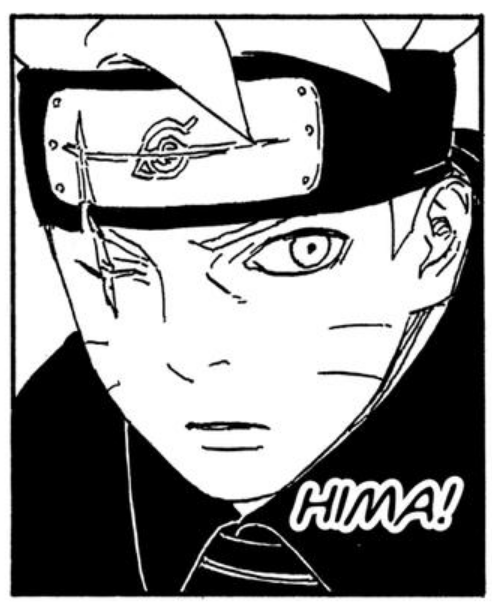
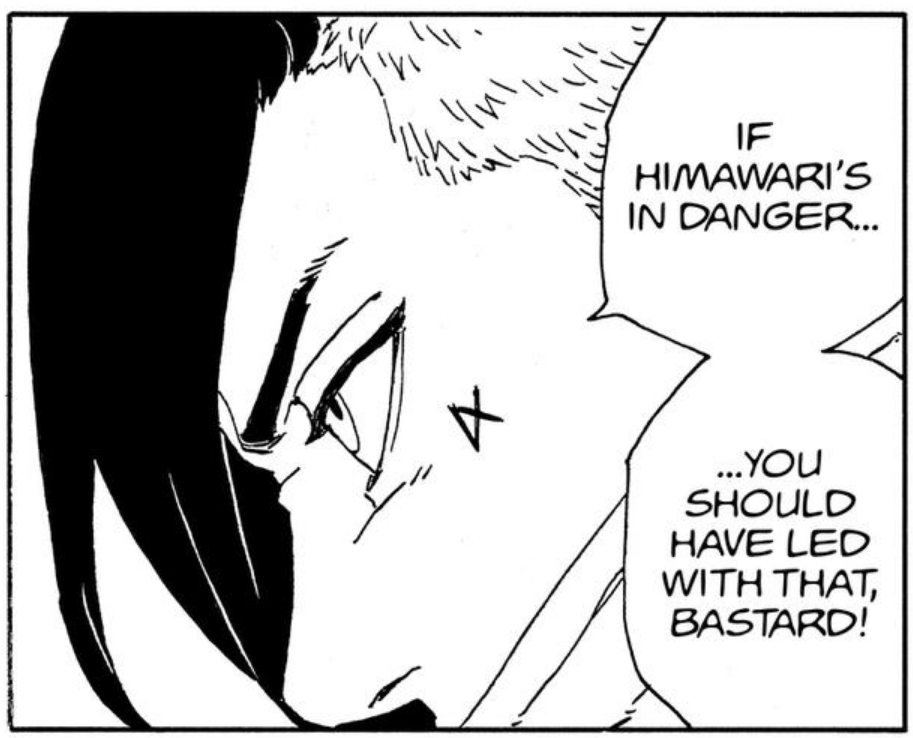
Throughout the first arc of TBV, Himawari shows that she's been inspired by both of the older brother figures in her life, explaining to the dubious members of Team 10 that she wants to help Boruto, the outsider, more because she remembers him as someone who saved her life and the life of her father. When she's steeling herself to confront Jura in her first battle as a Biju-powered baddie, she again invokes her big brother, in this case invoking her big bro (Kawaki in her memory, Boruto in actuality) and her father as her inspiration.
The potential sword of Damocles hanging over this arc is that we know, via Koji Kashin's visions, this battle could potentially end in the death of Himawari—a true death, not a trapped-in-a-tree death, as well as the capture of Eida, allowing Mamushi to devour her and consume her powers. While this knowledge has only been explicitly shared with Inojin in the manga, we can infer that Boruto knows as well when he decides to make a deal with Momoshiki while sitting outside his childhood home, observing his sister attempting to train with Kurama.
Now that we've set the scene for the events that will be unfolding in the chapters of volume 9, let's take a closer look at Hima and individual characters, starting with Boruto.
Boruto and Himawari
Ikemoto has been toying with readers since the start of TBV, keeping Boruto and Himawari apart from one another. With Sarada and Kawaki taken out of play in chapter 32, we have the setup for a possible team of Boruto and Himawari at long last. While imagining the battle potential of this pairing is insane, the emotional stakes are even higher. Could we finally see Naruto and Hinata's children fighting together?
Let's return to Jura's evolving thesis in this series—love it a weakness of humans, but it also has the potential to bring out unimaginable power in them. Boruto and Hima fighting together would be the manifestation of the latter part of that thesis, that love can become strength. But with Hima's life on the line, we also know that this arc could end in tragedy. When Hima speaks of being inspired by her father and brothers, she's referencing not only their resolve but their willingness to sacrifice themselves. In the first arc of Boruto: Naruto Next Generations (NNG), she lived through her father being carried off by Momoshiki and Kinshiki to protect the village; in the Kawaki arc, her father put himself between her and Delta's laser attack, an attack which would have destroyed them both had Kawaki not sacrificed his arm to protect them; in the final arc, Hima sees her mother crying after Boruto leaves their house for the final time after he's already been killed once and asks if she should become a shinobi to help him. This family history, plus Himawari's willingness to stand up to Jura alone, should be waving some red flags about the potential harm she might put herself in.
Kawaki and Himawari
While the relationship between Boruto and Himawari has the potential to take center stage in this arc, at the end of chapter 32, Hima is seen running away from the safety of Team 10 and towards Kawaki, her big bro, as he's attacked by Mamushi while Boruto is occupied with Sarada. At the beginning of this arc, Shikadai has already chastised her for reacting rashly to situations, saying that they might not always be there to protect her from herself. This separation of Himawari from Team 10 could potentially isolate her with Kawaki while his scientific ninja tool body is malfunctioning, leaving her open to attacks from Mamushi or her own poor decision making without the guidance of her older shinobi allies.
Returning to what I mentioned earlier about Himawari recalling Kawaki's actions in the battle against Delta, we could see a reversal of their roles with Himawari in the position of protector and Kawaki as the one unable to defend himself. Even if this scenario doesn't lead to her death—though it could—it's easy to imagine the psychological hit Kawaki would take while being forced to watch the only person in Konoha he's tried to protect protecting him instead, reinforcing the idea that he's weak and in need of greater strength.
Daemon and Eida
If Himawari is the one who comes to Kawaki's aid, she'll be in a similar position of Daemon, a younger sibling defending the older one from the Mamushi hoard. In traditional sibling dynamics, it's the older sibling's responsibility to protect the younger one, yet the Daemon/Eida relationship has flipped that on its head with her little brother being her protective "knight." While I wouldn't be surprised to discover some twist later on in this are—I mentioned before the possibility that Daemon is a figment of her imagination brought to life via Omnipotence; it's also possible that his powers were a wish manifested by her to be protected or that her own wish to be loved by everyone was manifested by his desire to protect her from harm, both heartbreak and physical assault—the current dynamic is that a younger sibling is responsible for the wellbeing of an older one.
Daemon and Himawari
Daemon first encountered Himawari in chapter 77 of NNG, astounded by her powers and recognizing her immediately as someone who is capable of fighting him. At the time, this interaction was mainly passed over as a gag. It's only in retrospect that we realize its importance to the plot of TBV. Not only does this scene inform us that Kurama had already been reborn in Hima at this time, hiding until Jura sensed him and tried to consume her to obtain Naruto's chakra, it also gives us hints to how Boruto will react later when Inojin has a crush on his sister, in this scene telling Daemon, "Big bro won't ever approve, you hear?!!" when he mistakes his interest in her for attraction.
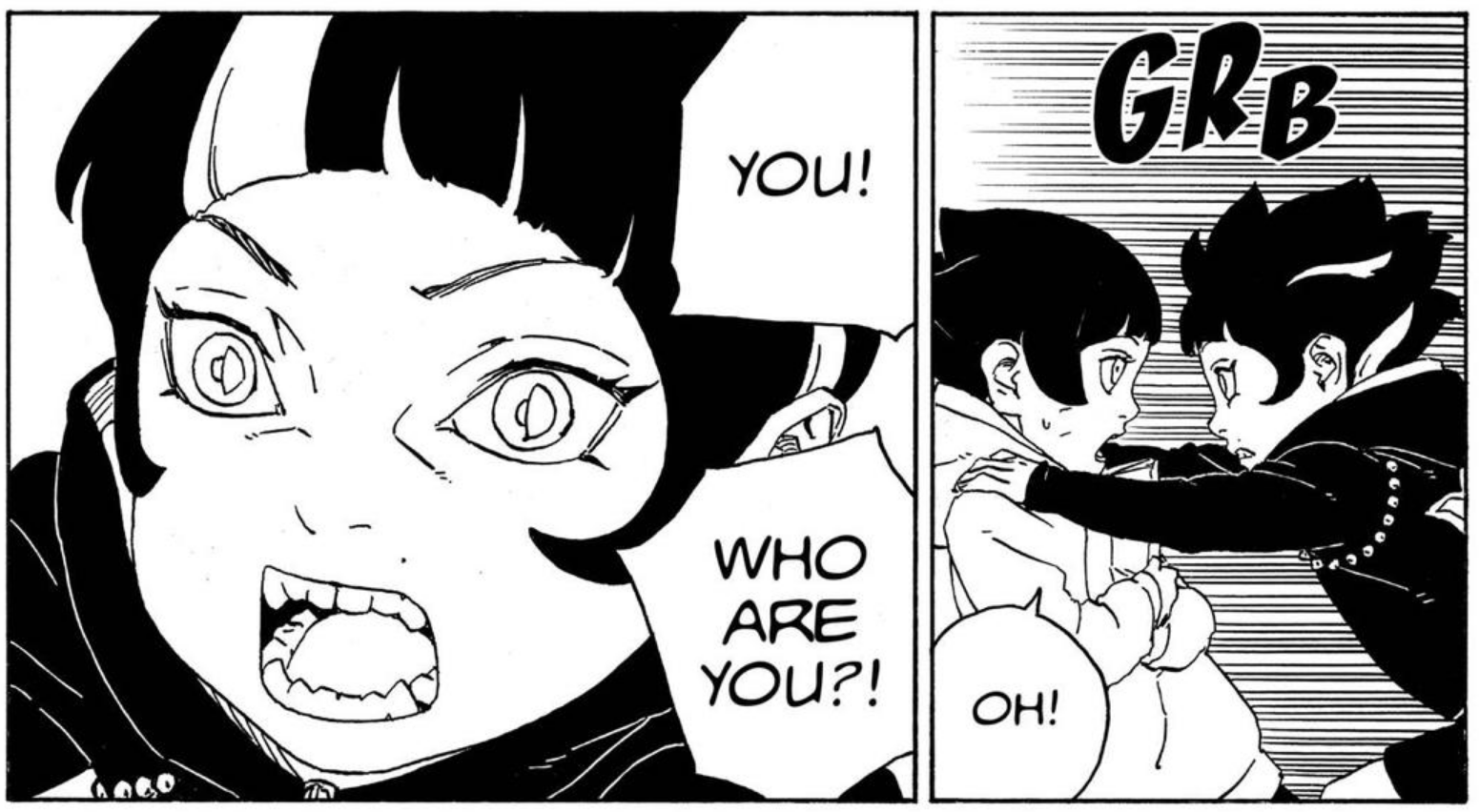
While there's potential for a Boruto and Himawari team up, the coming chapters could also feature a Himawari and Daemon team up, a chance for her to hone her fighting ability with a partner who recognizes her strength as an equal as they both work to protect their older siblings.
Boruto and Mitsuki
With siblings out of the way, let's take a moment to examine other character dynamics in chapter 32. The ending pages feature the first reunion of the original members of New Team 7, not so much a joyful panels as a tragedy, Boruto cradling Sarada's body as Konohamaru runs to assist them. (It's only now that I'm realizing that Konohamaru's presence in the op and purpose on the battlefield might be to pick up Sarada and run to the hospital as all he's done thus far is get Shikamaru in more trouble and gawk at the ongoing fights.)
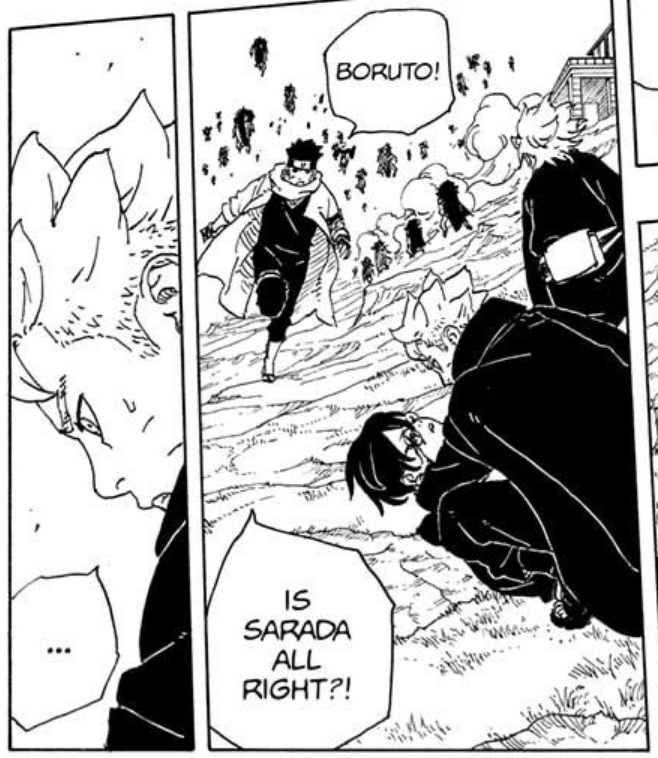
This is also the first time Boruto and Mitsuki are reunited since their heartwarming "if you insist on needing a sun..." moment in chapter 7 and the very first time in all of TBV that Mitsuki's dueling suns—Kawaki who refused to shed light upon his moon and Boruto who offers him light if he needs it—are in the same location. Just as Himawari will be pulled between brothers, so, too, might Mitsuki be pulled between suns. I hope we get a further expansion of this theme, returning to the stand-alone manga about Mitsuki's origins in which he listens to neither his parent, Orochimaru, nor his brother, Log, choosing instead to find his own way.
Boruto and Sarada
TBV has often rhymed with NNG in funny little ways, such as chapter one of NNG being titled Boruto Uzumaki while chapter one of TBV being titled Boruto and chapter 24 of NNG being titled Kawaki while chapter 24 of TBV was titled Kawaki Uzumaki. Keeping this in mind, we have to remember that this isn't the first time that Boruto has seen Sarada in peril in battle. Time for some wavy flashback lines...
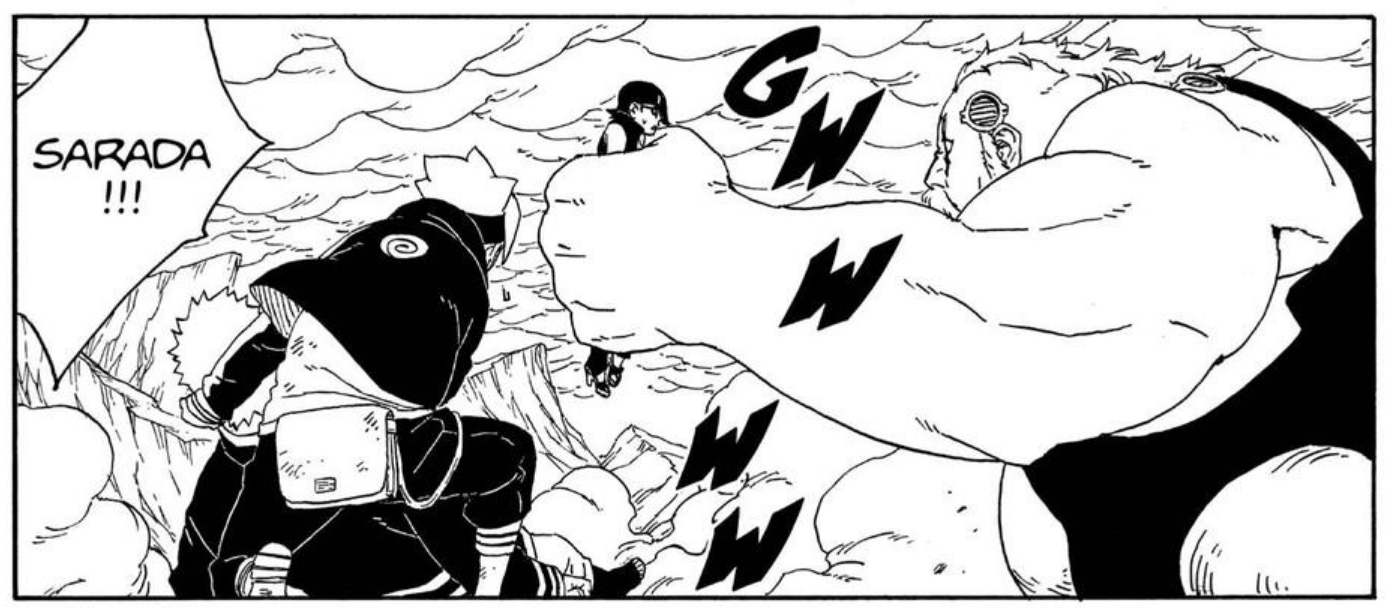
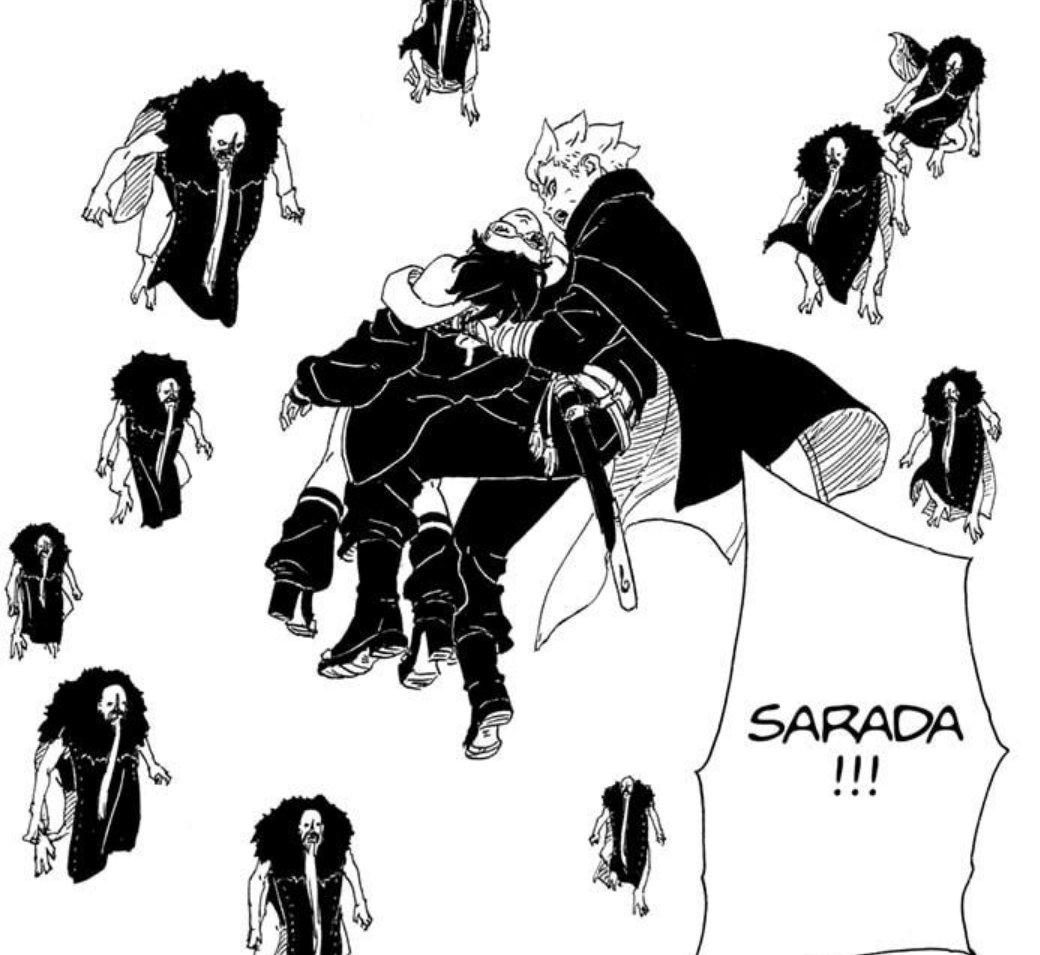
Nothing bad ever happens after Boruto screams Sarada's name, right?
That's right. Momoshiki's first emergence in chapter 43 of NNG was preceded by Boruto seeing her in danger and reacting in a way that caused him to lose the remaining chakra he had, thus creating the conditions for Momoshiki to take over. In fact, reviewing the earlier chapter, it's no wonder that Sarada is featured on the cover against the title Manifestation!! (yes, with two exclamation points). While I'm assuming someone is going to whisk Sarada off to the hospital, I think Boruto's distress over her is a potential warning sign that Momoshiki (or Boruto's embrace of Momoshiki's abilities) might be on the horizon.
Boruto and Eida
In chapter eight of TBV, we see Eida expressing the desire to talk to Boruto after witnessing his conversation with Mitsuki and observing how Mitsuki has changed his perspective on loving his sun, centering his own agency over another person giving him meaning. Things are getting pretty dire for Eida at the moment and, if it goes poorly, she's not going to have much time left to have that conversation with Boruto. It's possible they might get some page time together, but it's also possible that she might find the answers she seeks by witnessing Boruto's reactions, perhaps comparing his panic over Sarada to Kawaki's absolute nothingburger response to her when she informs him of Mamushi's desire to turn her into Eidasnacks.
Kawaki and Sarada
My household is a funny little place in which my partner is currently doing a full rewatch of all the Gundam series and listening to an accompanying podcast about them while I'm off here in my own Boruto obsession bubble. We also have these cross-conversations about the series we're consuming, themes, similarities, writing craft, etc.
If you recall in my chapter 32 review, I pointed out that both Kawaki and Sarada respond to Shikamaru's battle plans with overestimations of their own strength, one panel stacked atop the other. It seemed like a direct parallel between their characters, one overestimating his scientific ninja tool abilities, the other overestimating her doujutsu abilities. Briefly skimming over some earlier TBV chapters led me to finding two other places where their words and actions align.
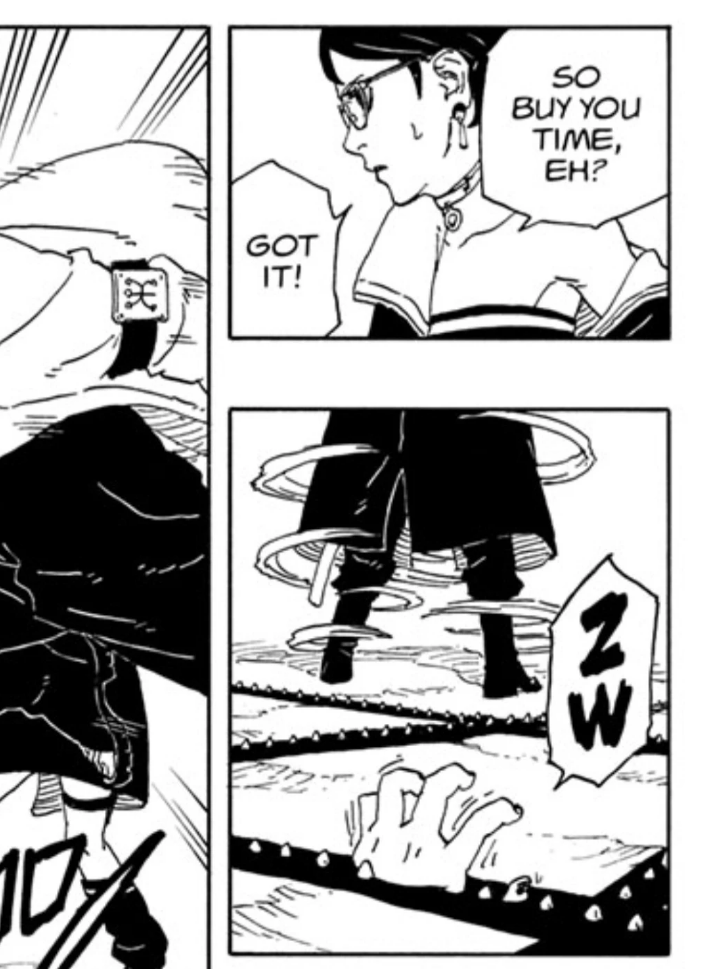
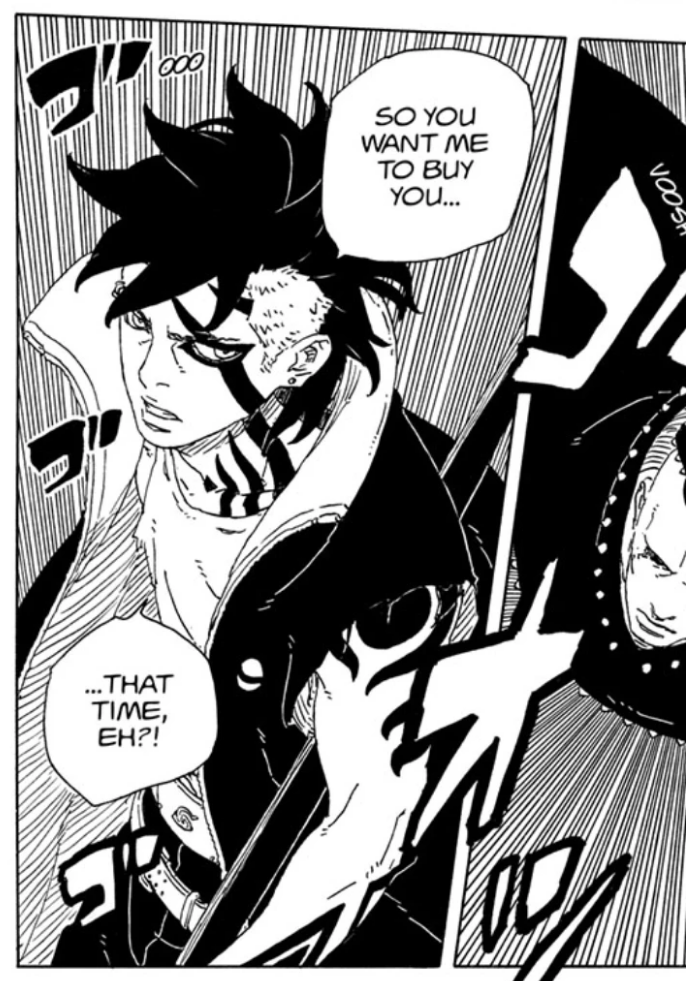
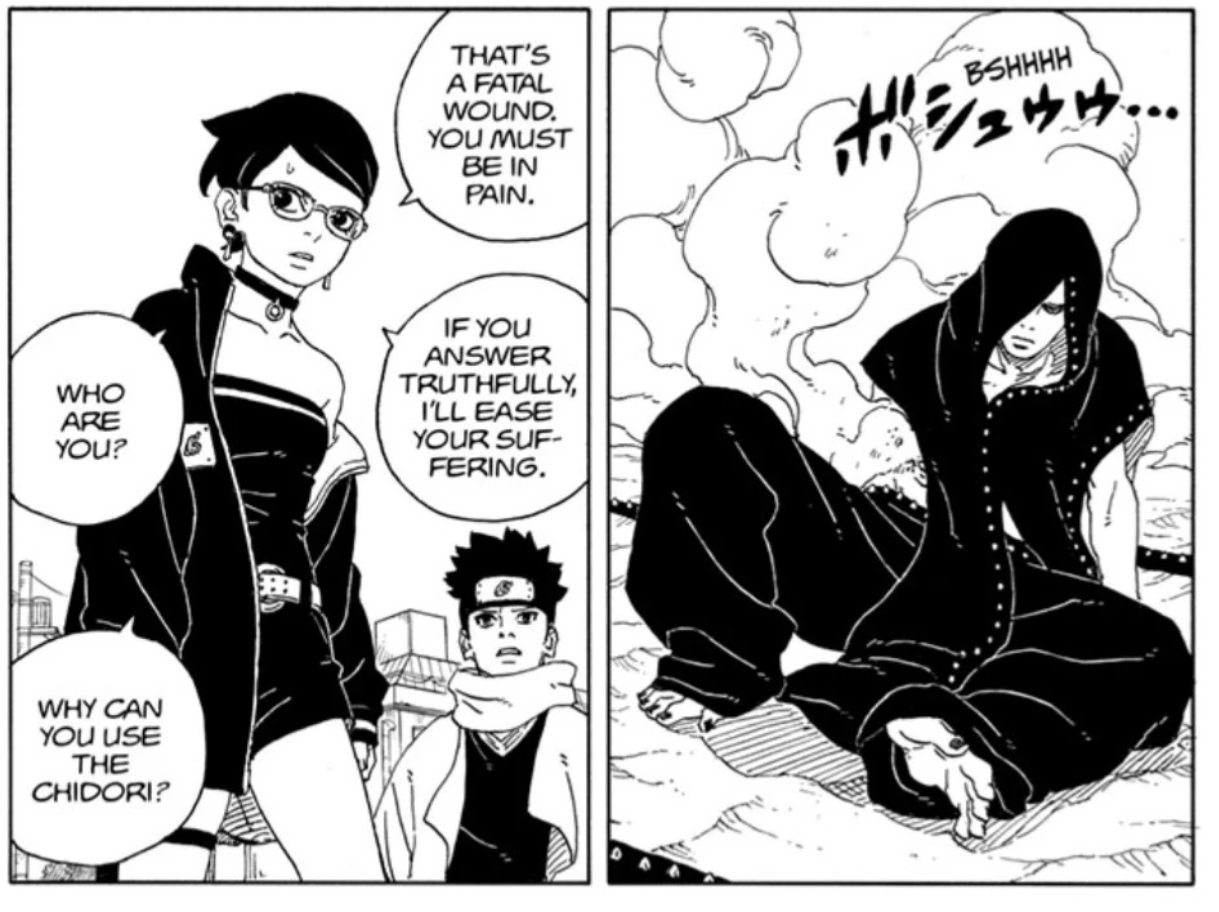
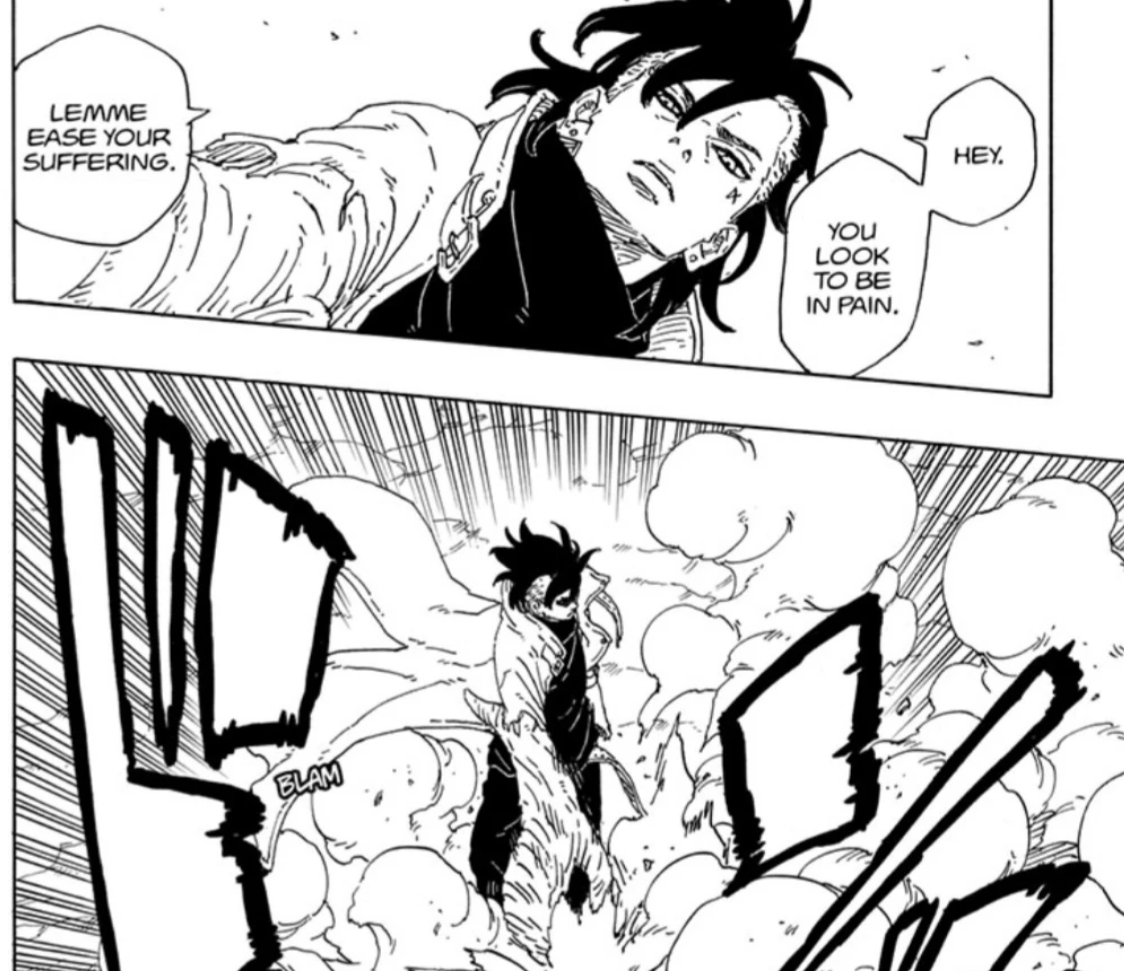
Two characters who are not alike in the least and are not being purposefully written to parallel each other.
I was showing the sets of similar panels to my husband, who responded, "Well, you know what they say about Tomino's [Gundam's writer's] work: if it happens three times, it's on purpose."
This is not to say that Kawaki and Sarada are written to be the same character. Rather, that they're opposite ends of the same spectrum on an axis related to Boruto. For example, let's look at the first parallel above, Boruto asking both of them to buy him time to perform a jutsu. While this is teamwork, it's also reinforcing the underlying insecurity of both characters that they're not strong enough. Boruto is telling both of them to be a distraction while he does the real work instead of them taking center stage. In traditional teamwork dynamics, this is a strategy that could work well, but Boruto and the other characters haven't been functioning as a cohesive team for a while. Instead, Boruto's request reinforces the idea that neither Sarada nor Kawaki are strong enough and haven't progressed as far in their training as he has. In my opinion, this is what sets the stage for the events in chapter 32 where both are so eager to use their new abilities without having them tested beforehand that it leads to disaster.
Daemon's Abilities
A brief reread of the chapter before writing this caused me to realize something: Amado posits two theories to Sumire as to why the Mamushi hoard travels as one after Boruto lures them with the promise of Eida: either they share eyesight and vision or, while thinking independently, "a single collective consciousness govern[s] the entire swarm."
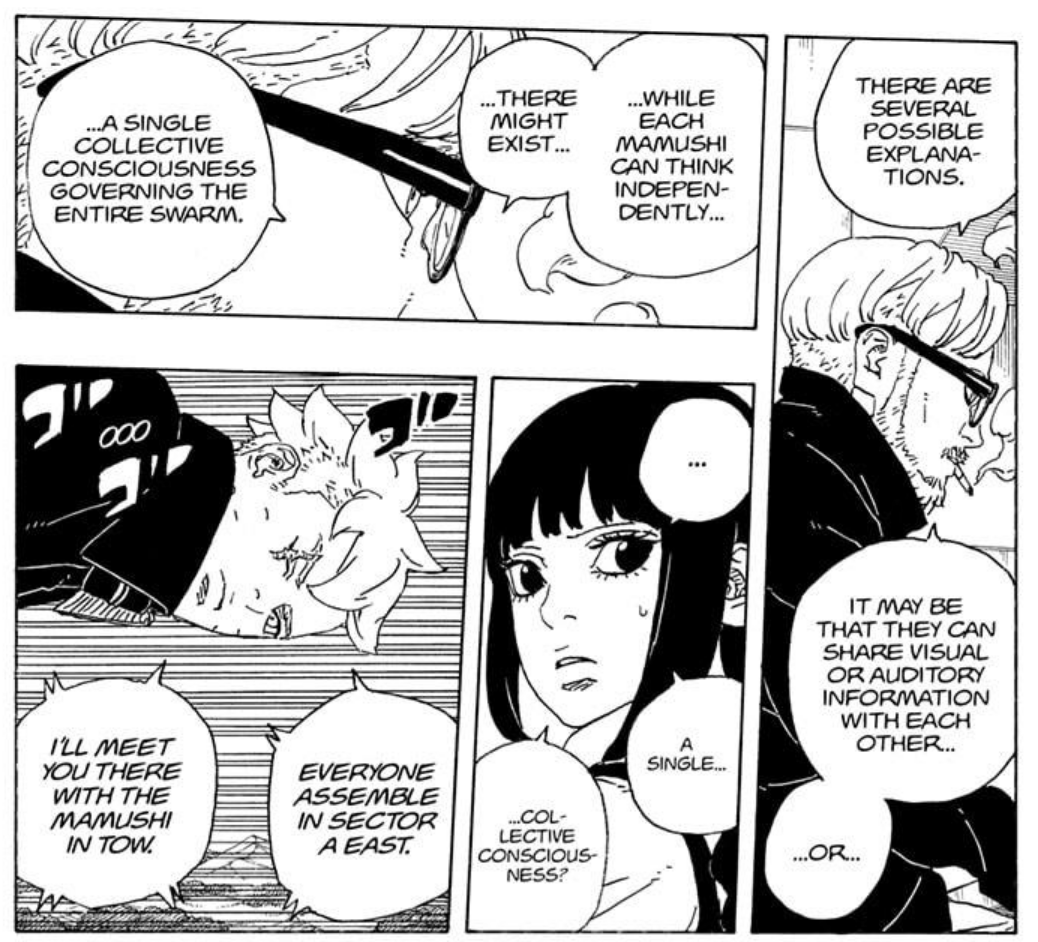
If not collective, why collective shaped?
As so often when Amado posits things, I believed the latter statement to be the more accurate one. However, if the Mamushi were governed by a single consciousness when up against Daemon, I would assume his reflective ability would work against the desire of the singular consciousness to kill them, despite each thinking independently. However, his reflective ability only works against the ones who are directly attacking him. This could disprove Amado's second theory or it could bring up another intriguing, and dangerous, possibility.
If we recall, the goal of Shikamaru's op is to defeat the Mamushi and destroy their eyes, which is what allows their division ability. It's also possible that Daemon's reflective power lies in his eyes as well, and blinding him would result in an inability to protect Eida through touch. If we want to stack secondary proof on top of this, Bug was shown to have information about Daemon's powers, and the interaction between Daemon and Code suggested that some details had yet to be revealed. If Bug (and Mamushi via Bug) is aware that destroying Daemon's eyes would inhibit his abilities, it explains why in every reflected attack, the Mamushi's heads are getting bashed in, thus losing their eyes as well.
Mamushi Art
Finally, I want to return to a thread I posted on Bluesky. All of you who follow my account there can bow out and go get a glass of water.
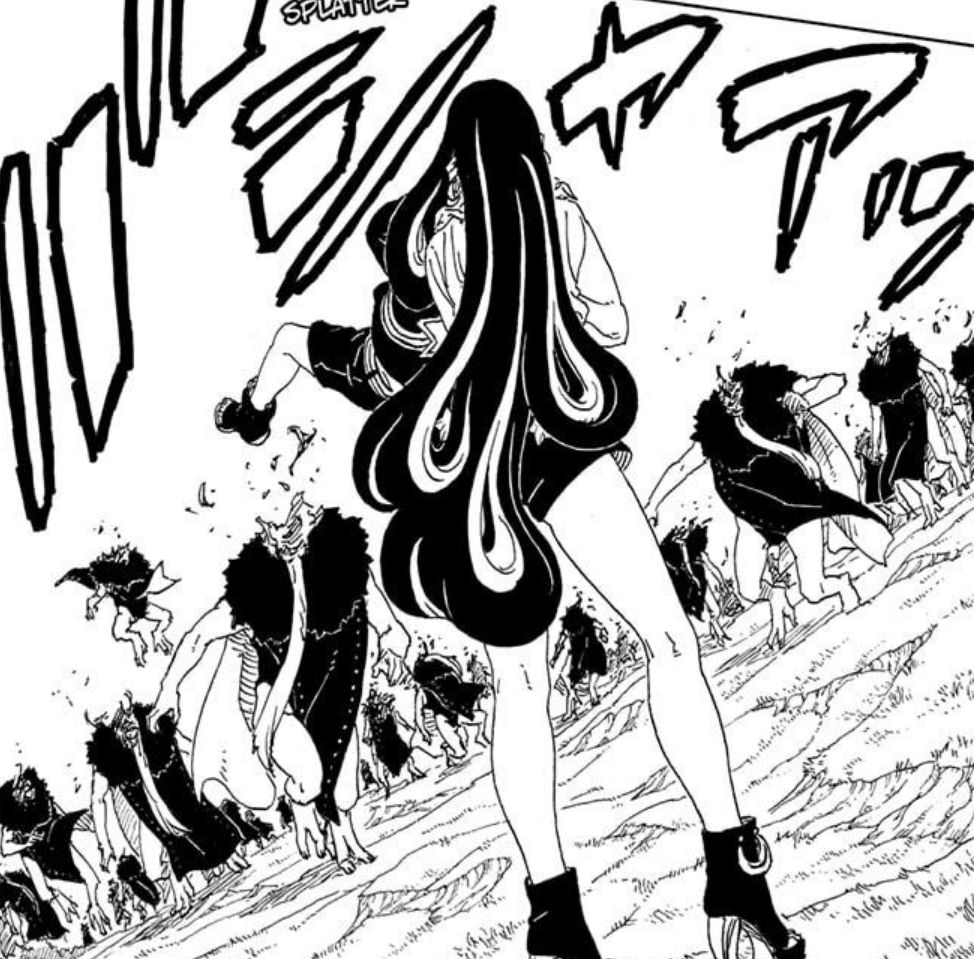
The moment I saw the second sneak peek for chapter 32, the image of a chain of flying Mamushi scratched something deep inside my brain, but I couldn't quite place it. I considered it cinematic, something perhaps out of Star Wars or The Matrix trilogy. So, I buckled down and did some research...
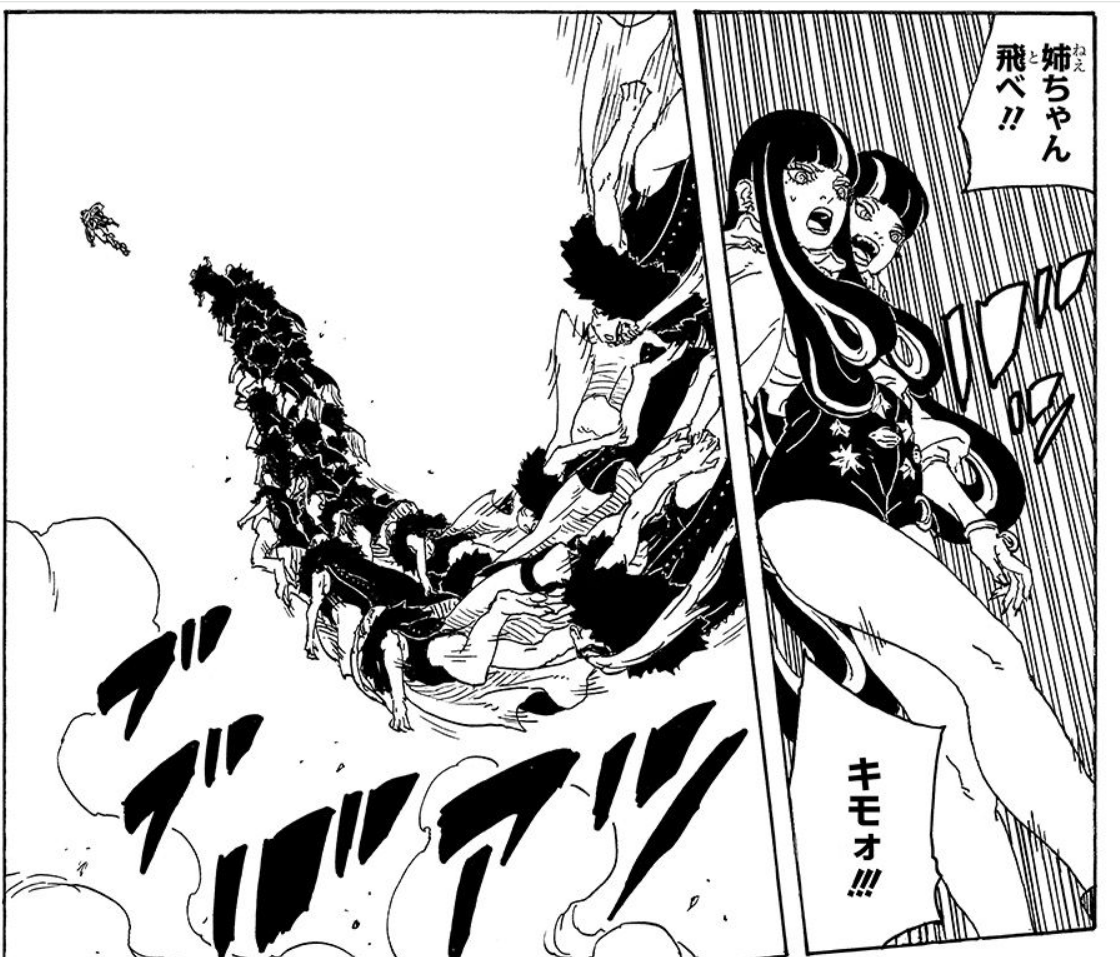
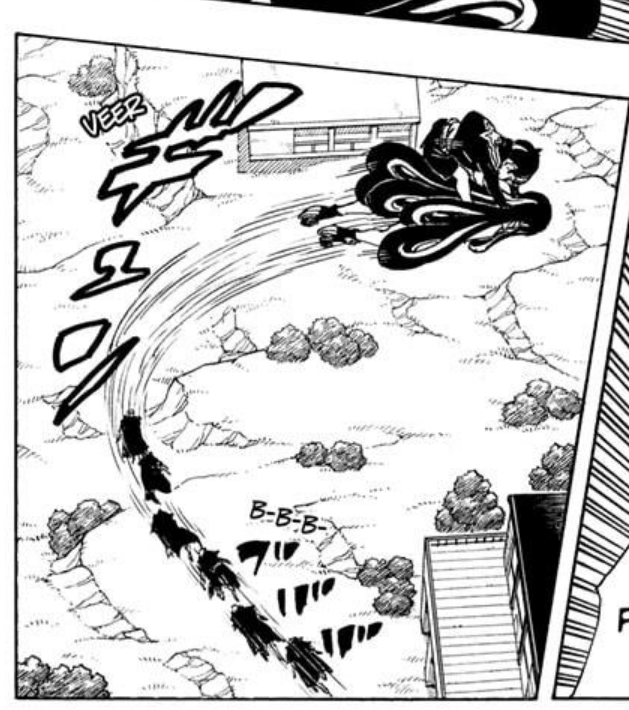
The second sneak peek plus a second panel, the importance of which will soon be evident.
I'm kidding—I asked my very smart friend if it rang any bells for him and, after a few days, he returned with something marvelous: The second circle of hell from Dante's The Divine Comedy: Inferno.
The second layer of hell is reserved for those who have sinned through lust, doomed for an eternity to be swept up in a tempest like they were swept up in torrid desire that led them astray. If we recall Mamushi's soft core porn magazines and the way he speaks about wanting to possess and control Eida's superior genetics, plus his overall skeeviness, the portrait painted is that his depiction of love as possessive lust, similar to how Matsuri displayed possessive romantic attraction. While the sinners in hell are doomed to repeat the carnal cycles they experienced in life, we see Mamushi actively pursuing the object of his base desires.
Now, I'm sure you're saying, "Okay, that all sounds nice, but it's a pretty out there theory to assume a Japanese mangaka is kicking it with Dante's Inferno," and that, my friend, is because you haven't seen the art yet.
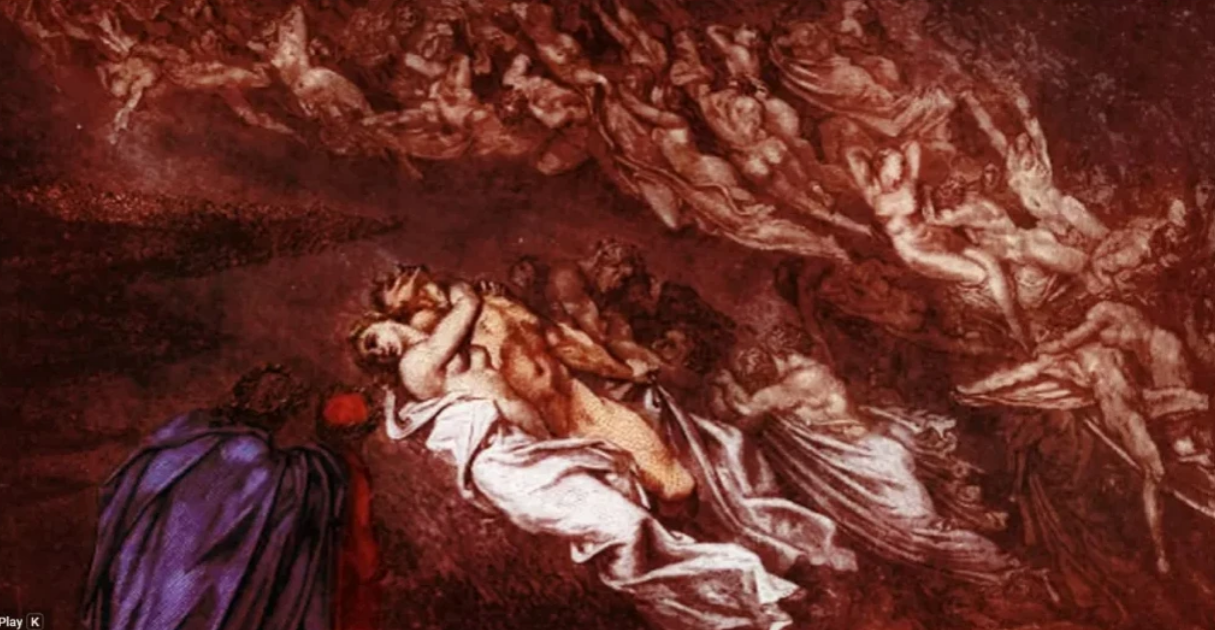
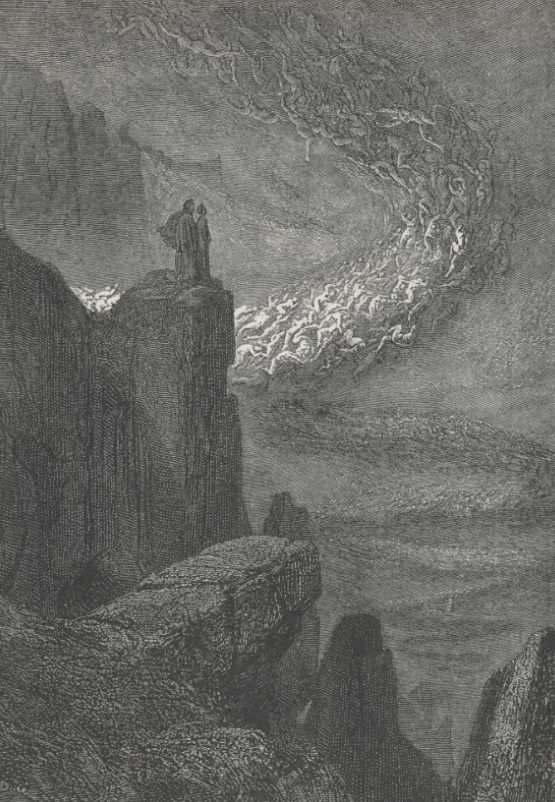
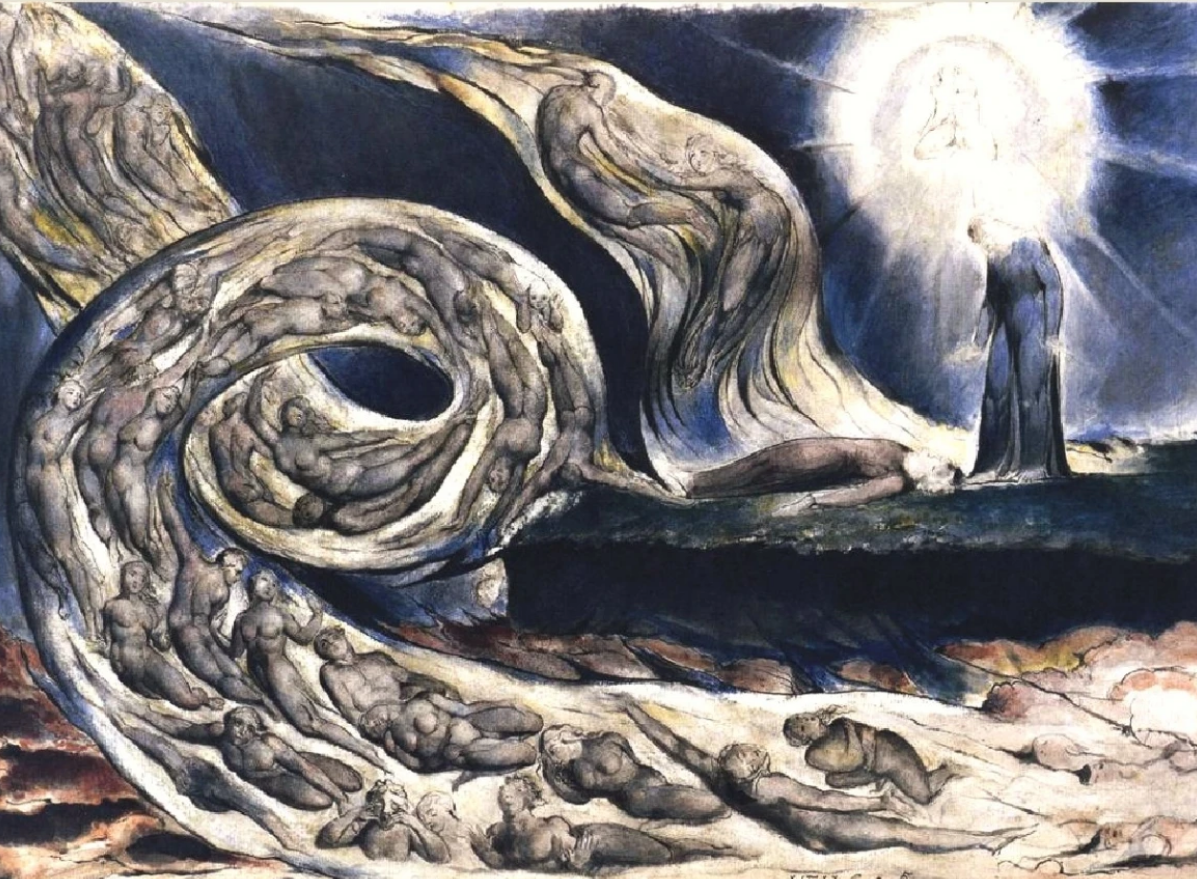
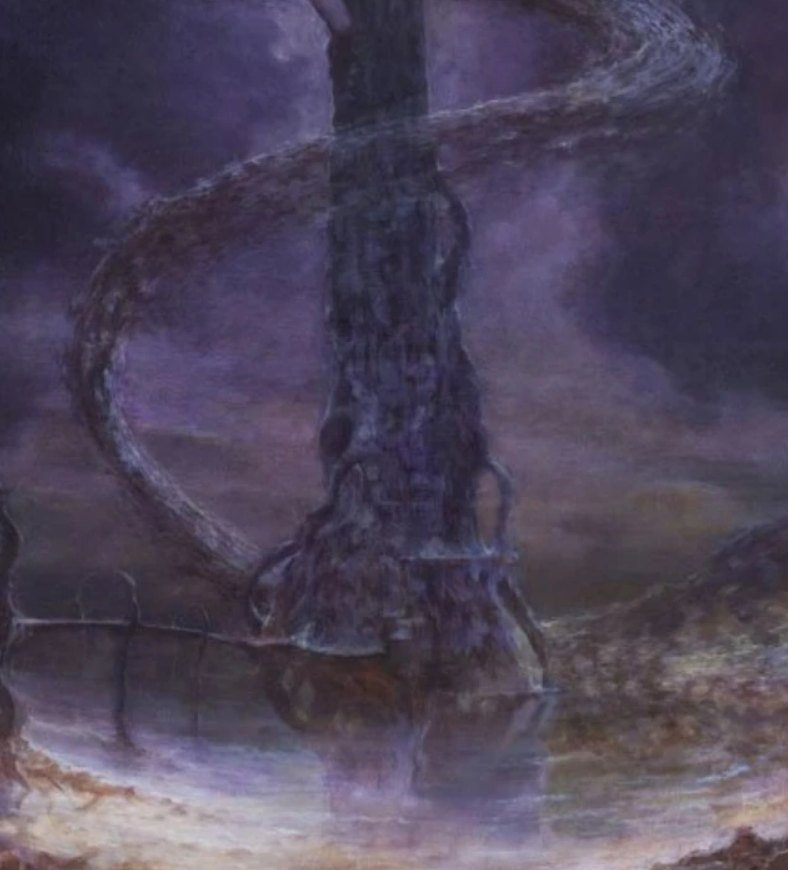
Dante provides an alternative definition for thirst trap.
In Ikemoto's panels, Mamushi's motion mimics the depiction of these lost souls, forever trapped in the winds of desire, the semi-clothed bodies in the art similar to the Shinju's loose-covering plus swimsuit design.
Lest I am remiss, another individual later noted the similarities between Boruto landing on Code's face in the first chapter of TBV to artist depictions of the archangel Michael stomping on Satan's face. While in some depictions, Michael looks very like Boruto, armed with a sword, there are other depictions of him with a spear that are fascinatingly reminiscent of Kawaki's entrance into chapter 24, standing atop Jura's head with his staff. If we want to heap onto this potential angelic imagery, when both boys are flying, the tails of their coats or capes have often appeared as sharp points behind them like a pair of folded wings.
I've noted before that Ikemoto's developing style in TBV has shifted from his more dynamic art in NNG to a more posed art. Viewers feel less motion in the panels and more still imagery. A good explanation for this is if Ikemoto is leaning into some western classical art styles. All of which is to say, this prose-focused blogger might have to sit her ass down with some art books and see what other similarities shake out of that exploration.