Boruto: Two Blue Vortex Chapter 38 Review

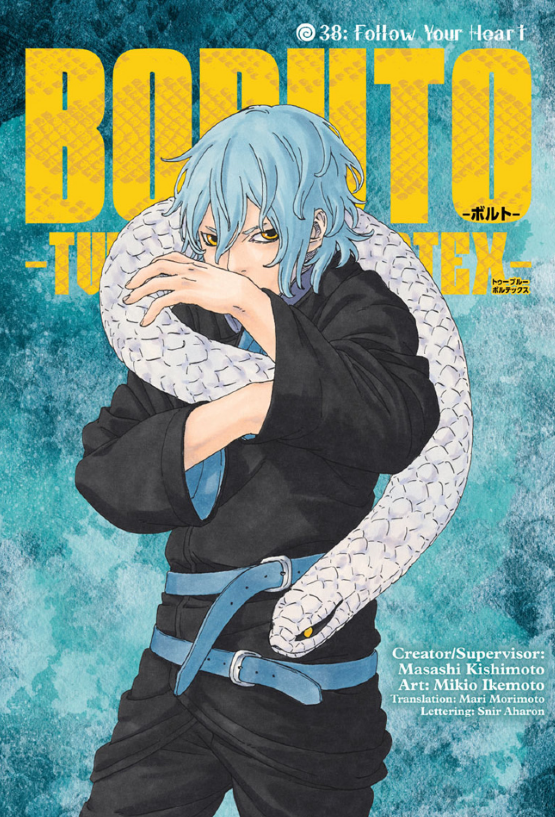
Cover
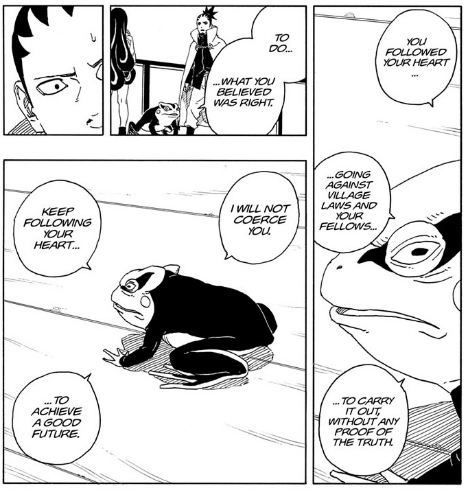
I have been dying for another Mitsuki chapter, and Boruto: Two Blue Vortex (TBV) chapter 38, Follow Your Heart, delivers an absolutely stunning one despite a distinct lack of Mitsuki in the chapter. However, I don't find the his absence incongruous with its content: Mitsuki is the OG "follow your heart" character who is caught between his conflicted memories of Kawaki as his sun and the emptiness he feels inside. Even before Koji tells Shikamaru that the key "to achieve a good future" is to "keep following your heart," both Shikamaru and Mitsuki have already instinctively followed that command, defying the will of the village and its elders to do what they think is right. Kobu's presence in Konoha and the ammunition given to the Daimyo to abolish the ninja villages is a direct result of Mitsuki's actions earlier in the plot—and I expect he's going to return to the page in the next chapter.
Comparing the two Mitsuki covers below, we see the change he's undergone in the series since his confrontation with Boruto back in chapter 7, Whereabouts of the Sun. We see the title of the series, Boruto's name, faded into the background in the chapter 7 cover, his name almost lost in darkness. Mitsuki stands in front, his arms at his sides, hands hidden in his sleeves. He's inactive, a character who has been trapped in a world that's a lie, lost because the person he believes to be his sun refuses to illuminate him.
On the latest chapter cover, the title is illuminated, Boruto's name colored in bright yellow. The snake pattern that had only been in the background before is transposed over the letters, a symbol of Mitsuki himself being able to shine on his own, integrating his idea of the sun into his own identity. The background is lightened as well, maintaining the same color as the previous chapter, now brighter due to the belief in himself that Boruto encouraged Mitsuki to have.
His pose has changed as well. His hands, so often hidden, are now visible in action, the snake that refused to attack Boruto coiling around him. This revealing of hands can be viewed as Mitsuki being on the move, ready to act, though another possibility is to read it as the metaphorical showing of hands, that through the discovery of Shikamaru's note, their plot has been uncovered. Regardless of the meaning, Mitsuki has struck a combative stance, ready to fight for what he believes in.
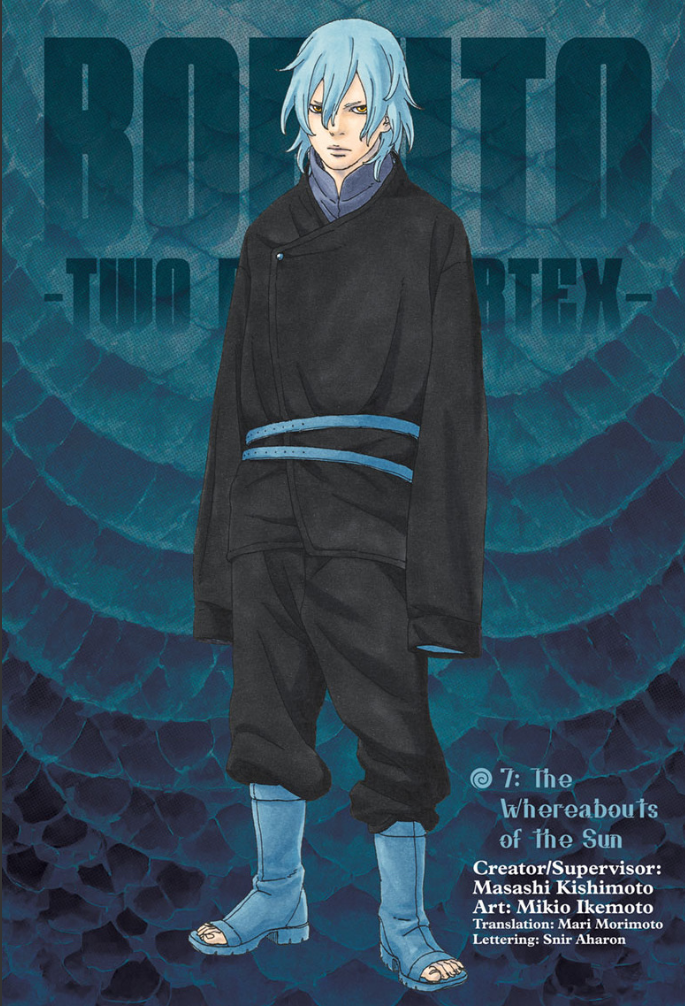
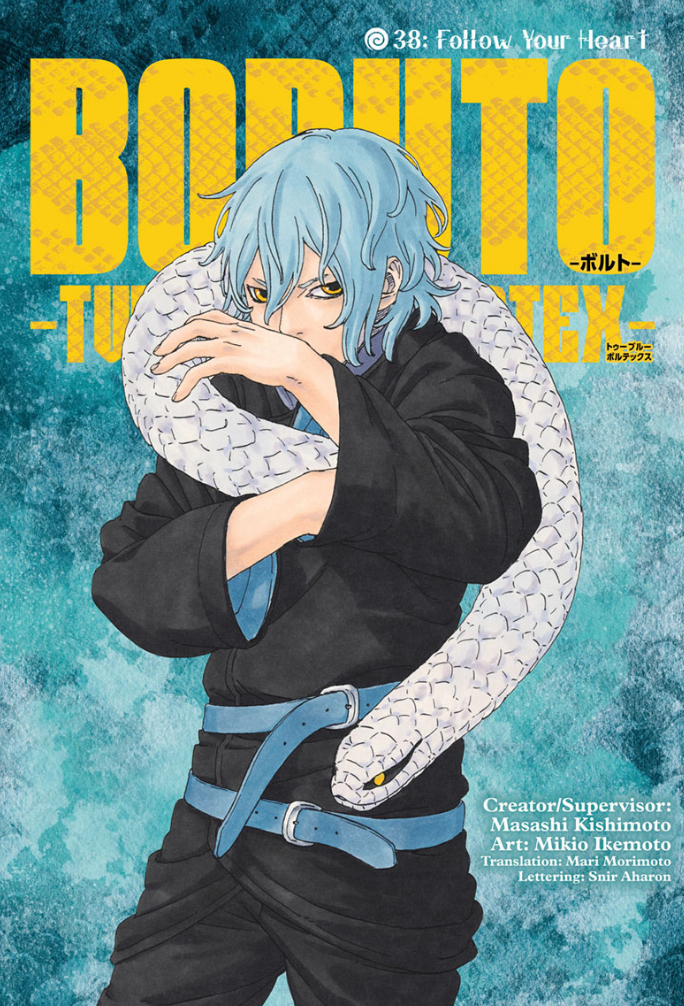
Compare and contrast the Mitsuki covers.
I have an unreal amount to say about this chapter title, so instead of extrapolating here, I'm going to call back to it throughout the review. The core idea is what's mentioned in the above exchange between Koji and Shikamaru, that the best thing you can do to ensure a good future is to follow your heart. I feel as though each scene has a character grappling with that theme and what is in their individual hearts.
Daikokuten Therapy Session
When I saw the first sneak peek for chapter 38 featuring Kawaki apologizing to Naruto and Hinata unconscious in Daikokuten, I was excited for readers to experience some of Kawaki's interiority in TBV, something that has only been subtly revealed throughout the series. Instead, the scene turned out to be a rehashing of things that we already know, revisiting some plot points that haven't arisen in the last 40 chapters—a very legitimate literary device and one I've had to use from time to time in long stories. I also think there are some important unspoken details in this scene, which we'll discuss as well.
The one-sided exchange (an oxymoron!) between Kawaki and Naruto reaffirms Kawaki's belief that all Otsutsuki-related beings need to die to protect the peace in Konoha that Naruto spoke of so reverently. He lumps together Code, the Divine Trees, Momoshiki, and himself and Boruto as threats that need to be killed. This list is enlightening in that it separates out Momoshiki and Boruto as two different entities, both of which he's resolved to deal with.
However, I think we also see a blind spot developing in Kawaki's logic. He's correct when he says that the Otsutsuki attract more crises, but he believes that their eradication will lead to "true calm." He holds the belief that an era of humans like Naruto would lead to a world of peace; however, those of us who have access to other aspects of the plot are fully aware that the Daimyo of the Great Nations are planning to defund the shinobi villages that are tasked with maintaining peace (it's not stated where they want to divert those funds to, whether it's alternative protection through Scientific Ninja Tools or ostentatious ballrooms). The logical error that we see Kawaki making is believing that a lack of Otsutsuki will mean peace, which might lead him to have more faith in the plans laid out by humans who are bad actors than Otsutsuki with good intentions (i.e., Boruto). Or, at the very least, he's not paying attention to other issues in the village outside of the pursuit of his named enemies.
When Kawaki speaks of the Otsutsuki minions, he names Momoshiki, Code, and the Divine Trees, but it'd be logical for his elimination list to eventually extend to Shibai-DNA-enhanced individuals: Eida, Daemon, Koji. They also could be considered "Calamities that threaten the peace [Naruto has] built." Their powers are all disruptive to the previous stasis of the village and "eradicating [the Otsutsuki] completely" could logically encompass ridding the world of god-powered cyborgs as well.
After stating that he still intends to kill both himself and Boruto, we get a moment of pause from Kawaki before he reminds readers that the initial reason he put Lord Seventh (and Hinata) in Daikokuten is so that he wouldn't have to witness Boruto being killed a second time. The text made this fairly clear back in chapter 77 of NNG when Shikamaru said to Kawaki, who'd just sensed Momoshiki still in Boruto, to "Stop and recall Naruto's face when he saw that his son was dead!! So calm down and really ponder what it is you actually need to do." Kawaki's response to this was to drop Boruto, erase his chakra signature, shrink himself, and put Naruto in Daikokuten until after he killed Boruto (for the second time).
When Kawaki restates his intention to kill Boruto ("for real this time"), he also promises to protect Himawari, no matter the cost, specifying that "this is not in exchange" for taking Boruto's life. For Kawaki, this is his "follow your heart" moment. His attachment to Himawari isn't transactional; it's what he feels he needs to do, the thing his heart is telling him he must do, the one thing he won't compromise on. Due to how it's positioned in the narrative structure of this arc, I think this statement is doing some heavy foreboding.
Structurally, the points that Kawaki covers in his monologue are all things readers should already know: his desire to kill all the Otsutsuki and "their minions," his protectiveness of Himawari, the full reason why he sealed Naruto into Daikokuten. What's enlightening about the scene is what it depicts about his character in TBV.
Other than in the opening chapter, this is the only time we've seen Kawaki visit Naruto and Hinata in Daikokuten, which occurs directly after the exchange with Amado in which Kawaki's face expressed guilt and regret about overheating in the last fight and accepting the offer to boost his power with toads instead of traditional shinobi training. When he begins speaking, he starts by apologizing for his failures so far. His intent when he sealed Naruto away was just to keep him there until Boruto was dealt with, but since then, the list of threats to Konoha has only grown while Kawaki's ability to handle them has not. Any additional strength he has stems from artificial interventions—Amado removing his limiters, then increasing his power to unsafe levels before finally offering to take over control of his offensive and defensive abilities.
Kawaki sits before Naruto to justify himself just as he did before sealing him into Daikokuten, but the paneling Ikemoto uses is a mirror of Kawaki's isolation. Eyes are almost always used in Ikemoto's scenes to show characters' reactions to and participation in conversations, but when Kawaki is speaking to Naruto here, we see over and over again that he's really just talking to himself. Boruto still has people who know who he is and believe in him: Sarada and Sumire. Since returning to Konoha, he's interacted with many under the influence of Omnipotence and has brought them to his side—Shikamaru, Konohamaru, Mitsuki, Chocho. We've seen him having many conversations with other people and witnessed their reactions to him, which are often shows of faith in his true self and intentions.
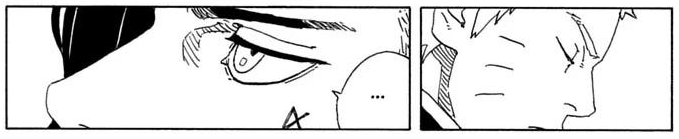
In this scene, one of the few times in which Kawaki speaks freely about his motivations in all of TBV (perhaps his argument with Sarada and ultimatum to Amado are other examples), there's no one present that he can convince other than himself. Where other characters would speak to someone who can react, all of the panels of Naruto show his closed eyes, unable to hear or respond. This is representative of the world in which Kawaki lives in. He hasn't taken advantage of the connections created when Omnipotence made him the Hokage's son except when working with Shikamaru to protect Konoha. We never see him use his position in the village to appeal to others or involve himself in political machination. Whereas Boruto has Sumire and Sarada who believe in him, Kawaki has Eida who wants his love, yet she also has never been able to express why she values him. Her attraction has no stated basis in the person he is, yet she was willing to trade Boruto's life to Code in exchange for receiving Kawaki as her romantic preference. When he deduced this, Kawaki said "Just as I thought. The only people who ever want something from me are generally all scum," which summarizes how he views and relates to her throughout TBV.
The other person who values Kawaki is Himawari, though Omnipotence has made her believe that the outsider in whom she has faith is Boruto, the treacherous outsider. Throughout TBV, we see Kawaki keeping her at arm's length, pushing back whenever she calls him big brother, and purposefully keeping his distance from her. At the end of the opening scene of chapter 38 when he returns to Konoha, Kawaki reappears outside of the Uzumaki home, watching Himawari through a window, maintaining the separation between them. His observation of her is akin to Boruto's moment in chapter 25 when he sat on a roof beside his childhood home and made a deal with Momoshiki while listening to his little sister argue with Kurama. They both exist as her protectors (oddly reminiscent of Eida's knights, Daemon and Code) without interacting with her.
There's another very interesting detail that comes up in this scene, but we'll return to it when its relevance is apparent.
Three-way Fight: Part One
The choreography of this fight is absolutely stunning, a true Ikemoto special of managing complex fights with conflicting abilities in a clear yet cinematic manner. Having Sarada and two foes in opposition to each other who can transport through claw marks (and their own bodies!) at will is no mean feat to depict. Different perspectives are used to give us a full view of the Shinju's hideout, the thick tree roots descending from every angle, the way they converge together at the top, the craggy dais upon which the black block with the Ten-tails symbol and its thorns is located.
The first move is made by Hidari, who emerges from claw marks behind Sarada, his sword-like arm sweeping towards her. Sharingan activated and kunai in hand, Sarada is ready to defend herself when Code exits from the same claw marks, blocking Hidari's attack with his bone-like hand, his white karma activated.
"Regret this in hell!" is some B+ level smack talk from Code before he tries to rip Hidari apart with his claws; however, his hand goes through the black garment he wears, his clothes having the same teleportation properties as a claw mark on the black studded parts of a Claw Grime.
I'm genuinely amused by Code calling Hidari a brat, which feels like a subtle nod to the fact that despite their independence and rebellion, he's still their father in a way, the Ten-tails unable to exist in their current form without the modifications made to them when he created the Claw Grimes using belts laced with his own blood. Hidari's signature dry humor (or confusion and curiosity, depending on how you read it) comes up again when he mocks Code's ineffective attacks, saying "How funny. What are you doing....? What is this...?"
Just as Code deduces that he'll have to attack the exposed parts of Hidari, Sarada comes up behind him, enveloping him in a massive fireball. Sarada wins the insult war this time, countering Code's "You piece of trash!!!!" with "You brain-dead creep!!" right before he vanishes into the claw marks and reemerges from the black block, promising to break all four of her limbs and gouge out her eyes—a statement of which Hidari, standing in the background beyond Sarada, appears to disapprove.
In Peaceful Konoha
Koji expresses his faith in Boruto as he tries to sense Sarada's chakra, perhaps a manifestation of his Prescience-induced knowledge that Boruto can do this despite his earlier reluctance to support Boruto's intent to save her.
Jura is currently occupied in the bookstore with Furata, retail's most unlucky employee of the month. However, more trouble is afoot: Kobu is continuing his investigation into Shikamaru with the intention of ousting the interim Hokage and replacing him with... checks notes... Konohamaru.
In the interrogation room with Konohamaru and Nishi, Kobu reviews their case against Shikamaru as it stands now: only three people knew the code on the sealing jutsu cuffs—Konohamaru, Ibiki, and Shikamaru (why not Amado?!). Only Mitsuki could have released Boruto and only Shikamaru had the opportunity to pass the code along to him. "But physical evidence!" Kobu cries. "Got it right here," Nishi replies.
I like that Konohamaru has been ordered by Lord Kobu to get Shikamaru and Mitsuki during this exchange, but he continues standing there, listening to the proceedings. (Yes, he can arrange things telepathically, which it seems as though he's doing, but Kobu has also ordered him to drag Shikamaru there in restraints, if necessary).
Three-way Fight: Part 2
While Konohamaru battles it out with the sweat running down his cheek, Sarada faces off against Hidari. Code uses his teleportation abilities to thwart another one of the Shinju's attacks from behind, grabbing onto Hidari's head so that his branching arm fails to capture Sarada. Taking advantage of the precarious position Hidari has put himself in, his body half out of one of the beams supporting the massive roots around the room, Code pulls him out far enough to demolish the side of his torso with a swipe of his clawed hand, his abdomen attached by only a few inches of flesh.
While Hidari uses the claw mark on Code's head to make his escape, Sarada blows a second massive fireball directly where they both had been, landing in a crouch beside the black block while waiting for the flames to clear. The moment she hits the ground, one of Code's claws emerges from the block. She twists to attack with her kunai, but he grabs her entire hand in his massive claw. More black-studded marks appear beneath her, Code's bone hand emerging to latch itself onto her leg, seemingly breaking or dislocating it. Before she's done screaming, the same hand comes out of the block, forcefully breaking her arm as well.
The last panels in this series are framed from above, where Hidari is watching the proceedings, hanging from tree roots that are healing his wound. Once he's sure he's whole again, he drops down, landing on the black block, looking down at Code and Sarada.
For those of you who follow me on Bluesky, I posted a thread sympathizing with readers who were frustrated by Sarada's performance in this battle and what subsequently happens at the end of the chapter. On a reread, though, I have a greater appreciation for how she handled the fight. While I do think her plan to take on both Code and Hidari at once might have been overestimating her abilities a bit, I feel as though she also learned her lessons from the battle in the Sand and the Mamushi fight, trying to pace chakra expenditure for a long battle instead of passing out for the third time in as many arcs. She's judicious with the use of her Sharingan and sticks to less chakra-heavy attacks that she knows pack a punch. Her intent is logical: she wants to weaken one of her opponents so the other defeats him, then save her powerful attacks for when she's one-on-one with the victor. She's also genuinely in a tough spot here: there's nowhere on the battlefield that the claw marks can't reach and there aren't many places to hide. Seeing that Code continues to jump in to defend his prize captive (her!), she uses those moments to her advantage. It's smart fighting!
I also want to take this moment to point out something else about this scene. Forgive me for the use of meme format, but sometimes it's the most efficient way of expressing an idea.
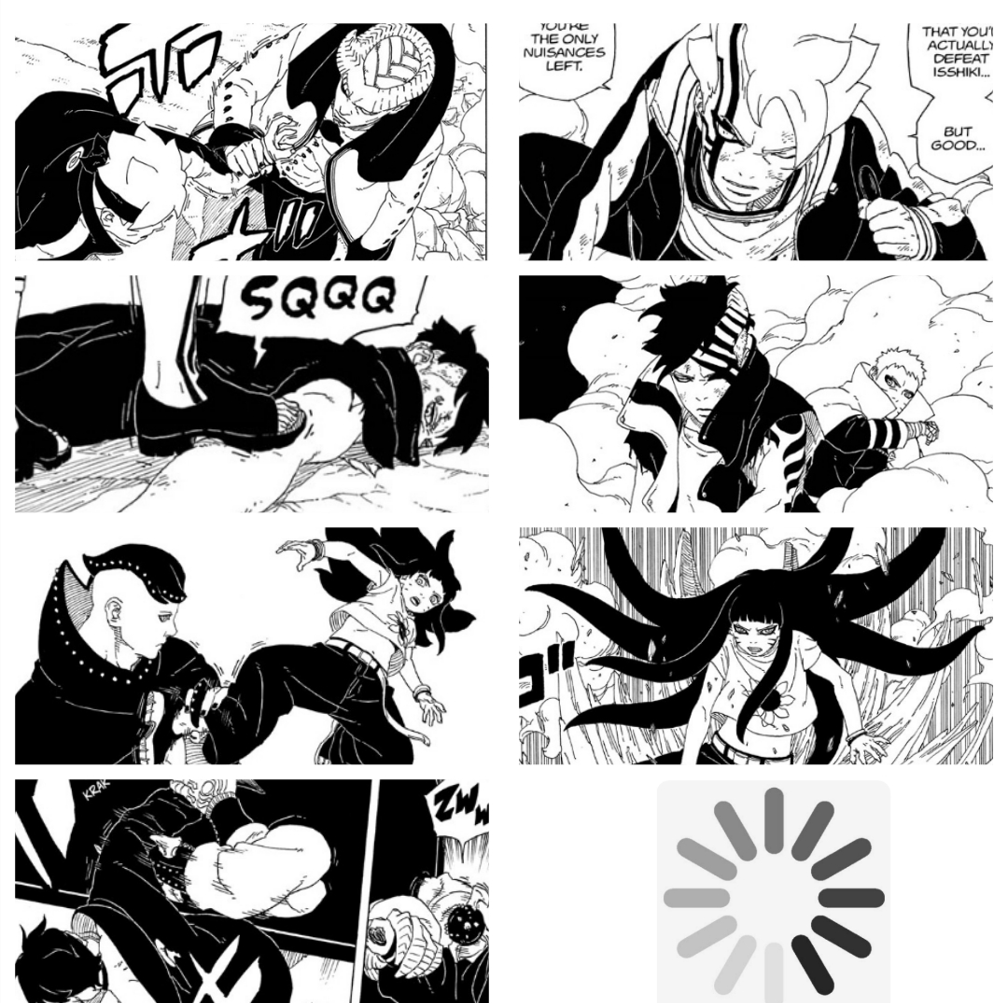
What I mean in the above grid is that we have frequently seen antagonists use the cruelty of breaking someone's bones as a sign of a character's impotent weakness (Shojoji threatens to do it to the boys way back in the second arc as well!), but every time that a character has had a bone broken, there's a subsequent revelatory power-up afterwards.
I think the cases of Kawaki and Himawari are the most relevant to Sarada's situation: both of them were threatened by a foe greater than their abilities, both were rescued by someone who loves them, and both of them then drew forth a massive power they didn't know existed latently inside of them in order to protect the person who defended them. It's notable as well that Kawaki doesn't win the Code fight and Himawari doesn't win the Jura fight, but both of them display powers that are able to protect someone dear to them and that yield greater growth as the story continues. If the pattern holds true, we might see some explosive growth from Sarada in this arc.
Hercule Nishi
If I have one primary bitch with the chapter, it'd be the following: the hard proof that Nishi presents Kobu with is a notebook that Shikamaru borrowed from him with a corner torn out of one of the pages. By using a pencil rubbing on the page behind it, Nishi was able to discover the unlocking code for the handcuffs written on it.
Let me first give this plot point grace: it does what it needs to do, providing proof to Kobu that Shikamaru did indeed assist Mitsuki in freeing Boruto (unless, that is, Konohamaru tries to take the fall for it). I'm sympathetic that sometimes a narrative needs to get from point A to point B to facilitate a story, and yet...
This is the kind of plot device used by unwitting criminals who scribble something down in the free pad left in their hotel room, not shinobi. This level of subterfuge wouldn't even get a character past the written portion of the Chunin Exams. To credit Shikamaru, yes, he was in a tight spot. Yes, Ino, his secret-message-deliverer, just ditched him. But this was the best he could come up with? Writing the number while it was still in the notebook instead of tearing it off first? Or tearing out a whole page? Or scribbling it down onto the single-sided foil paper that lines a cigarette carton? He didn't even need to return Nishi's notebook to him! He could have just accidentally slipped it into his pocket and disposed of it later. Then, the biggest proof Nishi would have is "he borrowed my notebook."
Deep breath.
It's okay. The story does what it's supposed to do. And I keep reminding myself that the average readership of Boruto might not have watched a few British mysteries or detective shows or police procedurals, all of which have used this form of evidence. (Apparently, Shikamaru hasn't, either.) Maybe we live in a more digital society where most readers aren't even aware of the possibility of pencil rubbings. Maybe they don't know what pencils are! (That last point is sarcasm.)
Anyway, my general feeling is that I would have preferred something more... shinobi-like. But it is what it is. We move on.
Military Defense Spending
Koji drops all the spoilers about Lord Kobu's plan on Shikamaru: deposing the Hokage, inserting Konohamaru as a figurehead while seizing control of Konoha, abolishing the Shinobi villages after doing away with Boruto (who is perceived by the Daimyo as the primary threat, as though three years of a cold war with Code followed by a Claw Grime invasion was no biggie).
Plot points about the Daimyo's defunding of the villages have been in Boruto since early in the series. If I recall (I may be incorrect), the Boruto movie novel said that part of the reason why Naruto wore himself out when getting ready for the Chunin Exams was because of budget cuts that left Konoha understaffed. Something I wish TBV was giving us was how the political situation has changed in Naruto's absence. Even if the intent of the Daimyo has remained the same, what political power vacuum was created when Naruto was "killed," and how have they reacted to their biggest protectors (Naruto and Sasuke) either disappearing or being removed? It's also unspoken how they want to reallocate their funds. Is it for continued defensive modernization through Scientific Ninja Tools in the hands of people wholly loyal to them, infrastructure, or personal greed?
It's worth saying that I think Lord Kobu is also underestimating Konohamaru in all this. While we've seen that he's not much of a tactical politician (quite a bit like Naruto if he didn't have Shikamaru at his elbow), he's still a Will of Fire shinobi, dedicating himself to the village and doing what's right. I don't think he'd serve as a willing puppet unless Kobu has additional leverage over him, though the little that the Daimyo's representative has seen of him thus far could easily lead him to believe that he'd be easily manipulated.
Personally, I find cutting funding to the military and police appealing, but I think that in the shinobi world, ninja serve greater roles than in our reality. Looking back through missions, they escort people from place to place, find lost individuals, investigate suspicious circumstances, engage in peace-keeping activities, ensure the safe arrival of important or precious goods from region to region. Also, unlike in our world, there are rogue ninjutsu users, walking, talking trees, and god aliens that civilians need to be protected from. Thus, I find Shikamaru's argument that cutting funding from the shinobi villages is "...absurd! Especially right now, when we're under threat from the Divine Trees!" to be more akin to cutting climate change funding. There is an existing existential threat to the world, but instead of continuing the current programs to mitigate it, they just want to cross out the budget line while saying it doesn't exist.
Going back to Kawaki's words in the opening scene, he says that "The Otsutsuki attract more crises too... So unless we eradicate them completely, this world will never know true calm." The Daimyo seem to be using this same logic as justification that "They want the public to perceive the traitor Boruto as the lone remaining danger and to believe that once he's been disposed of, all menaces will have been neutralized." While Kawaki does recognize that other threats exist, he believes that ending Boruto and himself will result in an era of peace, that their very existence is what threatens the world and that all the chaos that currently exists in it stems from their Otsutsuki presence.
A theory that I've occasionally suggested is that Kawaki ends up being the figurehead leader uplifted by the Daimyo, and this chapter throws a bit more fuel onto that fire if it turns out that Konohamaru is an unwilling puppet and that Kawaki's ideology actually aligns enough with Kobu's political maneuverings for him to think that their intentions match his own.
Just Follow Your Heart
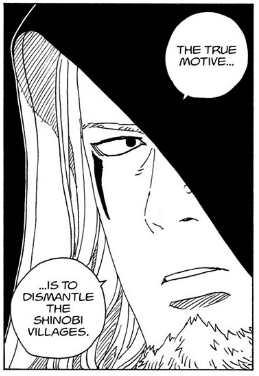
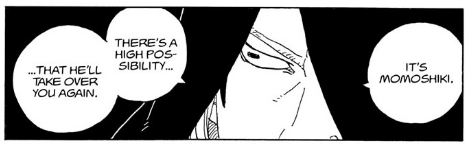
Boruto finally gets a lock on Sarada's chakra, but before he teleports to her, Koji warns him that after he rescues Sarada, "there's a high possibility that [Momoshiki will] take over you again." Note the word "after"—it's not something that is going to happen during the rescue mission, only afterward (if the translation is accurate). Telling Boruto at the last moment informs him (and, unfortunately, also Momoshiki) what is likely to come to pass while giving the psychopathic alien as little time as possible to figure out how he can do it.
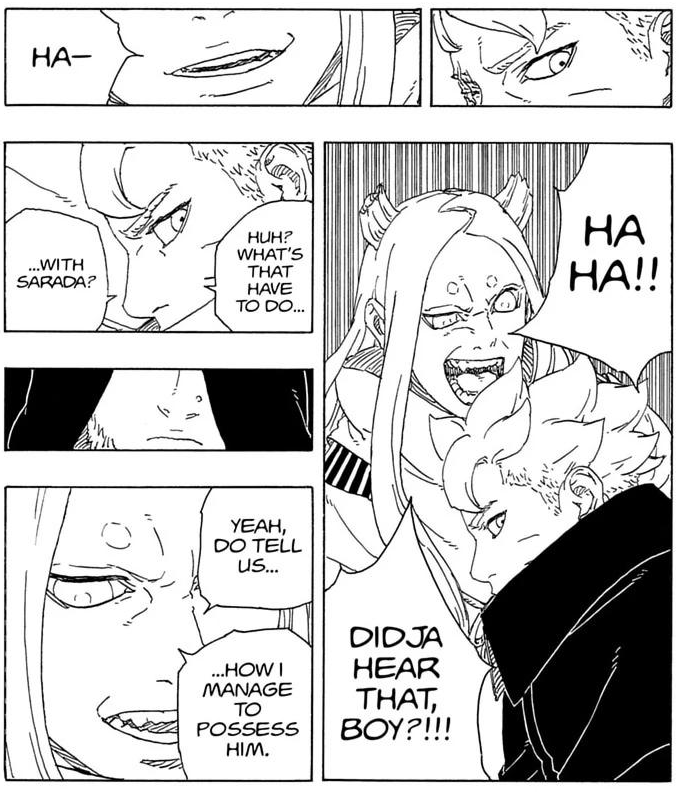
What seems even more foreboding in this scene is what Koji says next: "Boruto, know a least that I won't hold it against you. In fact, no one has the right to do so... Just follow your heart. Now go. She's waiting for you."
A lot of us have, rightfully so, focused on the flutter in our hearts when hearing these words. "Your heart." "Go." "She's waiting for you." But I want to dig a little deeper here. We understand why Koji has to tell Boruto about Momoshiki, but what won't he hold against Boruto, and why does he feel the need to tell him this now? If Koji's Prescience vision involves Boruto getting taken over and not returning (either by death or by imprisonment inside his own head), why would he need to know that Koji isn't going to hold something against him? Yet, if Koji believed they'd speak again, why does he have to offer him absolution now instead of afterwards?
The theory I'd like to posit here is as follows: Boruto and Koji are not going to speak to each other again. During this arc, Koji will join the battle to assist Boruto or defeat Momoshiki so Boruto can live, and he will die, either at Code's hands (er, claws) or Borushiki's.
Want a little more proof?
The exceptionally insightful starmag99 pointed out on Bluesky that Koji is starting to go into Sage Mode during this scene, which was also the purpose of Kawaki's flashback to Boruto's death in the opening of this chapter, reminding readers what an eye using Toad Sage abilities looks like. See the images below to compare Koji's normal pupil to his pupil during this conversation (after which his face is always hidden behind his hood) as well as Naruto's eye in this chapter and Koji in Sage Mode during the Isshiki fight.
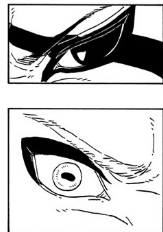
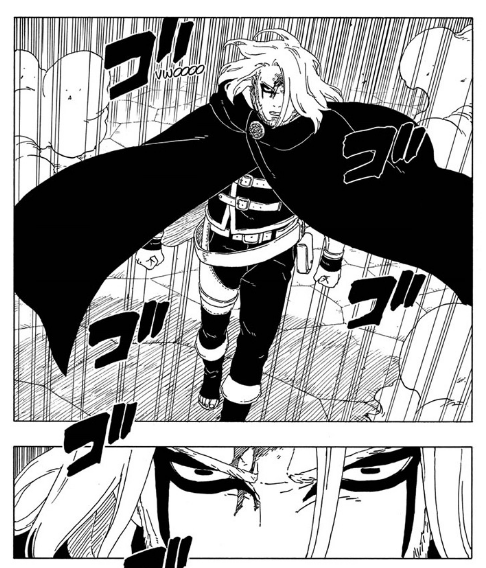
Koji's regular eye versus Sage Mode eyes
See? See????
I suspect that Koji is getting ready to join the fight by teleporting to the toad that Boruto has with him and will sacrifice himself in this arc. What he's forgiving Boruto for isn't being taken over by Momoshiki—it's his own death that results from Boruto's actions.
One final point... Even if Koji dies, his Prescience visions will probably continue through Amado, which was likely the point of his kidnapping earlier in this arc.
Shut You Up
We return to Code's brutalization of Sarada. Two broken bones. On the ground. Code threatening to destroy her hateful eyes. I understand the desire for a last-ditch effort to destroy Code and Hidari in this scene—you can still fly with broken bones, right? But I also understand the logic that when she's in extreme pain, she might not have the faculties about her to perform such a feat.
This is the moment in which Hidari follows the direction given by the chapter's title. Seeing Code about to claw out her eyes, Hidari's hand reaches through a claw mark and stops him, calling his treatment of Sarada cruel. Annoyed af, Code points out that it's a bit hypocritical to call him cruel given that his plans involve ending his day with a tasty Sarada snack. However, we haven't seen Hidari himself demonstrate cruelty in the way that Jura has, relishing in the opportunity to brutalize Hima before defeating her for the sake of releasing a bit of his true power. This is the human influence on Hidari, the part of him that has a heart and acts on his feelings.
I also want to point out that this dislike of cruelty might be personal, but it's also been learned. Before he was bulb-ified in Konoha, both Sarada and Kawaki remarked on his pain, offering to put him out of his misery instead of prolonging it. They demonstrated that unnecessary suffering to win a fight is unjust, which is what he stops Code from doing in the moment.
We don't get any additional exploration of Hidari's motivations in this chapter as Boruto shows up and performs a Mahito special on the corner of Code's mouth, giving him a scar that could match Yuji Itadori's. His sword pierces his inner cheek between his teeth, ripping outward in a spray of blood.
Hidari stares. Sarada's eyes soften despite her broken bones. Boruto delivers the final one-liner of the chapter. End scene.
Thoughts, Questions, Conclusions.
Misgivings about the whole pencil rubbing plot point aside, the more time I spent with this chapter, the more I enjoyed it. I think the pattern of having bones broken resulting in power is one that we'll see continue with Sarada, especially since we know this arc is likely heading towards calamity. There's still so many open questions regarding Koji's last Prescience update as well that we know her role in this arc is far from over.
- I've been thinking of Hima's role in Koji's visions. Given Sarada's injuries, I think it's possible she'd be called in to heal her, but I also wonder if Kawaki's vow to protect her is foreshadowing a threat she'll soon face, either from Jura, a Claw Grime, or the upcoming conflict between Borushiki and Kawaki.
- The vision of Sumire seeing Sarada's earring has been haunting me. It could be that Sarada loses an earring again and Kawaki picks it up, seeing through the cameras in his eyes. But given Amado's access to Prescience, I've been wondering if he is able to record his visions, and what we're seeing is Sumire watching them, subsequently leading to her engineering events as Koji does.
- A possible plot point suggested on Bluesky is that Kawaki will also seal Himawari away to protect her along with her parents, which is something that'd be good to watch out for. I also think it's possible that what stops Kawaki from killing Boruto this time is her intervening.
- So, uh, is Code going to grow some freaky bone teeth out of the side of his mouth now, too?
- This fight is going to be an absolute banger when it's animated.
- So far, none of Koji's visions have come to pass beat-for-beat, people's free will derailing them. Given that this update was so close to events, though, there's less time for it to change, unless that's what Koji is planning to do himself.
- Gotta say, I'm kind of conflicted that this plot is trying to put me on the side of supporting military funding. Like, please don't make me sympathize with the Daimyo. Tell me there's some shinobi world Peter Thiel trying to do additional evil with Scientific Ninja tools.
- Next chapter, we'll probably see Code deploy his new secret weapon (bone hand thing?) against Boruto!
- It's implied that Boruto will rescue Sarada and Momoshiki's takeover will follow, but it's also possible that Hidari takes her while he's fighting Code.
- Really looking forward to the scene in which Jura and Shikamaru share a drink.